
Barn Conversion vs House Renovation in France: Key Differences Explained
Barn Conversion vs House Renovation in France explained for foreign buyers, comparing planning rules, costs, timelines, and design flexibility before investing.
BARN CONSERVATIONHOUSE RENOVATION
1/19/20264 min read
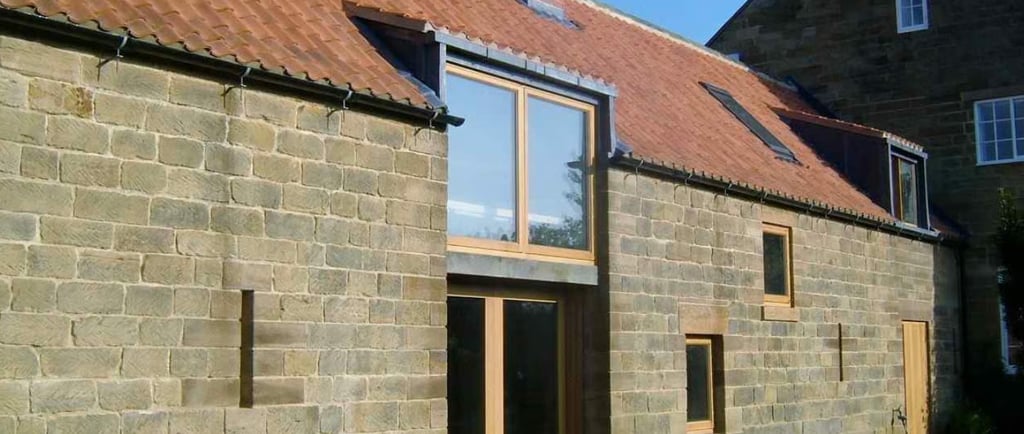
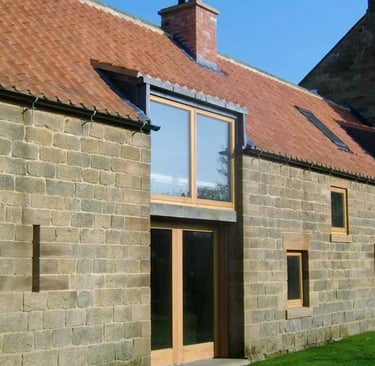
For many international buyers, purchasing property in France begins with a simple question: should you convert an old barn or renovate an existing house?
Although both alternatives are capable of producing beautiful results, there is an important difference in the planning laws, costs, risks, and design opportunities in the decision between a Barn Conversion vs House Renovation in France. It is essential to recognise this in the early stages, particularly for foreign buyers who may not be well versed with the French system.
This guide outlines the major differences in order to help buyers make an informed decision prior to making a commitment to a property.
Understanding Barn Conversion in France
Barn conversion in France consists of converting an agricultural building into a home. These are especially interesting due to the rural nature, high volumes, and architectural quality, giving foreign buyers a great way into French culture.
Barn conversion projects in France, however, come with certain challenges.
The majority of the barns were not designed to be occupied. Their legal status was set accordingly, and the possibility to change its designation should be established before design work is undertaken.
Key considerations include:
Whether residential use is permitted
Structural integrity of the existing building
Access to utilities (water, electricity, drainage)
Compliance with local planning regulations
In many cases, permission to renovate a barn in France is not guaranteed and depends heavily on local planning policies.
Understanding House Renovation in France
A house renovation France project involves improving or extending an existing residential property. These properties should already have legal residential status, which often simplifies the planning process.
Foreign buyers choosing to renovate house France typically benefit from:
Established utilities
Clear residential zoning
Predictable planning procedures
However, renovation projects still require architectural oversight, particularly when altering structure, extending floor area, or modifying external appearance.
Key Differences Between Barn Conversion and House Renovation
The differences between barn conversion and house renovation are not just aesthetic — they affect cost, timelines, and feasibility.
Comparison Overview
This comparison underscores the importance of early professional assessment.
Legal status sets the foundation. Barns typically start as non-residential agricultural buildings needing full change-of-use permission. Houses already hold residential status, skipping that hurdle entirely.
Planning complexity follows naturally. Barn projects face intense scrutiny over rural location, heritage value, and neighborhood impact—expect 6-12 months of council back-and-forth. House renos trigger moderate reviews focused mainly on external changes.
Structural work scales dramatically. Barns demand extensive engineering—roof stabilization, foundation upgrades, and damp-proofing old stonework. Houses vary by condition but rarely need full rebuilds.
Cost predictability favors houses. Barn budgets swing wildly from hidden rot, asbestos, or foundation failures; final bills often hit 20-30% over estimates. House renos stay closer to projections since layouts and issues prove familiar
Planning Permission and Regulations
Planning permission is often the deciding factor.
Barn Conversion Planning Regulations
Change of use approval required
Local planning authority discretion
Agricultural and environmental considerations
Approval for planning permission barn conversion France depends on regional policies, location, and sustainability criteria.
House Renovation Planning Regulations
Permits usually required for extensions or alterations
Fewer zoning uncertainties
Faster approval processes in many cases
Foreign buyers should never assume approval is automatic in either case.
Cost Differences and Budget Considerations
Cost is one of the most misunderstood aspects for foreign buyers.
Barn conversions often involve:
Structural reinforcement
Roof replacement
Insulation upgrades
Full internal construction
House renovations may require:
Modernisation
Energy upgrades
Structural adjustments
Extension works
While barn conversions can appear simpler and cheaper initially, they generally require more significant works to create a habitiable space than house renovations. So their minimum budget is set at a higher level than house renovations, which might be more flexible. With a more open structure, barn conversions can have more predictable budgets.
Timelines and Project Duration
Barn conversion timelines are typically longer due to:
Planning uncertainty
Structural complexity
Utility installation
House renovation projects usually follow more structured schedules, especially when work is phased.
Foreign buyers managing projects remotely must factor in delays, approvals, and contractor coordination.
Which Option Is Better for Foreign Buyers?
There is no universal answer.
For many foreign buyers of property France, the decision depends on:
Risk tolerance
Desired location
Time availability
Budget flexibility
Barn conversions offer originality and space but carry higher uncertainty. House renovations provide stability and faster results.
The Architect’s Role in Making the Right Choice
An architect evaluates possibility prior to acquisition and determines planning risks, cost exposure, and design capability.
In the case of international clients, it is necessary to work with a French renovation expert in order to prevent costly errors.
The involvement of architects early in the life of a project frequently turns out to be the difference between success and failure.
Conclusion
Choosing between Barn Conversion vs House Renovation in France is a strategic decision that should never be rushed. Each option offers distinct opportunities and risks, particularly for foreign buyers unfamiliar with French planning systems.
One of the few English-speaking architects in France who has a long history of consulting with international clients on their barn conversion, house refurbishment, and other intricate rural developments is Timothy Harris. He offers pre-purchase surveys for all properties, to establish the feasibility, viability, and program for a range of design options from the most simple to the most extensive.
Timothy Harris assists foreign buyers in making informed and sound decisions prior to investing in property with their pre-purchase surveys. He can then lead them through the design development, French planning regulations, and construction process. From inception to completion, he can set out the whole process in easy-to-understand English.
FAQs
Is it harder to get permission for a barn conversion in France?
Yes. Barn conversions often require change-of-use approval, which is not always granted.
Are house renovations easier for foreign buyers?
Generally, yes. Existing residential status simplifies planning and utilities.
Which option is more cost-effective?
The budget for House renovations can be more flexible than barn conversions which generally have a higher starting point.
Do I need an architect for both projects?
Yes. Architectural oversight is essential for planning approval and technical compliance.
English address: 16 Bronwen Crabtree Drive, Givons Grove, Leatherhead
French address: 2 Rue Paul Riquet, Fontiers Cabardès
+33634540127
+33430341314
contact@t-h-architecture.com